

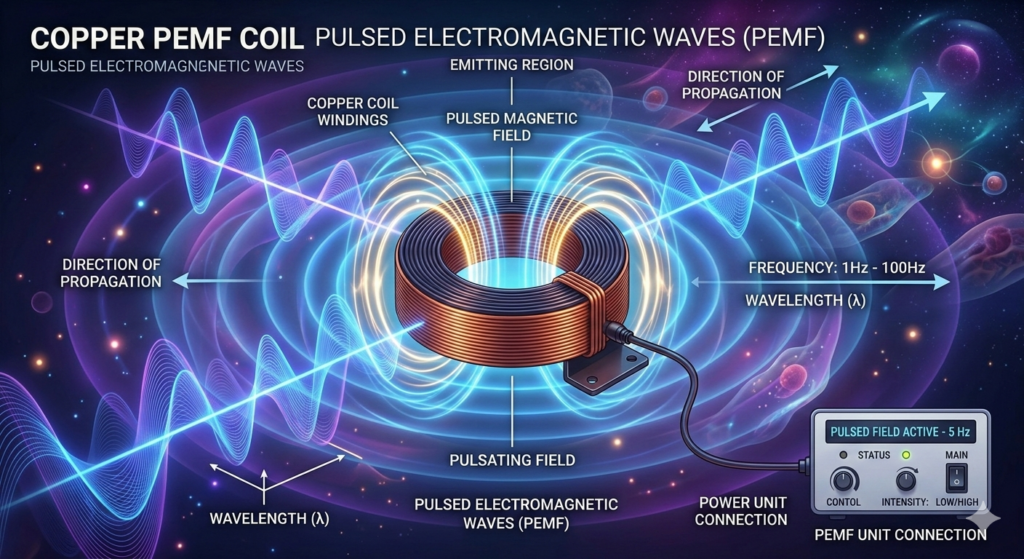
How PEMF Works at the Cellular Level
All tissues in the body are made up of cells, and healthy cells are essential for healing, comfort, and normal movement. Pulsed Electromagnetic Field (PEMF) therapy delivers gentle electromagnetic pulses that interact with cells and may help support their normal function.
While PEMF does not treat disease, research suggests it may support several natural cellular processes that contribute to recovery and comfort.
Cellular Effects of PEMF:
Supports Cellular Energy (ATP Production)
Cells rely on energy molecules called ATP (adenosine triphosphate) to perform normal functions such as repairing tissue, moving nutrients, and removing waste.
PEMF therapy may help support normal ATP production, which may allow cells to function more efficiently.
How this supports animals:
When cells have adequate energy available, tissues may be better supported during recovery from stress, injury, or normal wear associated with aging and activity.
________________________________________
Supports Cell Membrane Function
Each cell is surrounded by a membrane that controls what enters and exits the cell, including nutrients, oxygen, and waste products.
PEMF therapy may help support normal membrane function and ion movement, which plays an important role in maintaining cellular balance.
How this supports animals:
Healthy cell membrane function supports tissue stability, which may contribute to improved comfort and normal healing processes.
________________________________________
Supports Circulation Through Nitric Oxide Signaling
PEMF therapy may encourage the body’s natural release of nitric oxide, a substance involved in regulating blood vessel activity.
Nitric oxide plays a role in supporting normal circulation and oxygen delivery to tissues.
How this supports animals:
Improved circulation may help support:
• Delivery of oxygen and nutrients
• Removal of cellular waste
• Tissue recovery environments
• Muscle and joint support
________________________________________
Supports Normal Inflammatory Responses
Inflammation is a natural process that helps the body respond to injury. However, excessive inflammation may contribute to discomfort and delayed recovery.
PEMF therapy may help support balanced inflammatory signaling, including the regulation of chemical messengers called cytokines.
How this supports animals:
Balanced inflammatory responses may help support:
• Reduced swelling
• Improved comfort
• Normal tissue recovery
• Joint and soft tissue support
________________________________________
Supports Cellular Signaling and Protein Production
Cells communicate through signals that help guide tissue repair and maintenance.
PEMF therapy may help support normal cellular signaling and protein synthesis, processes involved in tissue structure and repair.
How this supports animals:
This may support:
• Bone recovery
• Tendon and ligament support
• Muscle repair
• Tissue maintenance

How Cellular Effects Relate to Observable Results
The cellular processes supported by PEMF may contribute to the physical responses often observed in animals receiving PEMF sessions.
Bone Healing Support
Bone tissue depends on specialized cells that build new bone.
PEMF therapy may support cellular activity involved in bone formation, which may help support normal bone healing processes when used alongside veterinary care.
Common supportive uses include:
• Post-fracture support
• Post-orthopedic surgery recovery
• Bone stress recovery
• Hoof and skeletal support
________________________________________
Comfort and Pain Support
Cell membrane stability and balanced inflammatory signaling may influence how tissues respond to stress and discomfort.
PEMF therapy may help support normal comfort responses, particularly in animals experiencing physical strain or age-related stiffness.
Common supportive uses include:
• Joint stiffness
• Musculoskeletal discomfort
• Senior animal mobility support
• Recovery from physical stress
________________________________________
Support for Inflammation and Swelling
Balanced inflammatory signaling plays a key role in controlling swelling and tissue stress.
PEMF therapy may help support the body’s natural inflammatory response, which may contribute to improved recovery environments.
Common supportive uses include:
• Joint swelling
• Soft tissue strain
• Tendon and ligament stress
• Post-injury recovery
________________________________________
Circulation and Tissue Recovery Support
Nitric oxide activity and cellular signaling may support blood flow and tissue recovery.
PEMF therapy may help support healthy circulation, which plays an important role in tissue maintenance.
Common supportive uses include:
• Muscle recovery
• Tissue healing environments
• Wound recovery support
• Edema support
________________________________________
Muscle Recovery Support
Muscle cells require significant energy during activity and recovery.
By supporting ATP production and circulation, PEMF therapy may help support muscle recovery following exertion.
Common supportive uses include:
• Performance horses
• Working dogs
• Agility dogs
• Livestock following physical workload
________________________________________
Joint Mobility Support
Joint tissues depend on circulation and balanced inflammation to function normally.
PEMF therapy may help support joint comfort and mobility, particularly in aging animals.
Common supportive uses include:
• Reduced mobility
• Joint stiffness
• Degenerative joint changes
• Senior animal wellness care
.
Research on PEMF Therapy: Quality and Limitations
Research on Pulsed Electromagnetic Field (PEMF) therapy has been conducted for several decades, with many studies suggesting that PEMF may support normal biological processes such as circulation, cellular activity, and tissue recovery. Some areas—particularly bone healing support and inflammation-related conditions—have more consistent research findings than others.
However, the overall body of research includes variability in study design, treatment settings, device types, and treatment protocols, which can make results difficult to compare directly. In veterinary and animal-specific research, the number of large, controlled studies is more limited than in human medicine, and responses may vary between species and individual animals.
While available research is promising in several areas, not all reported benefits are supported by strong or consistent clinical evidence, and outcomes may differ based on the animal’s condition, health status, and frequency of treatment.
PEMF therapy should be considered a supportive wellness modality, used alongside appropriate veterinary care rather than as a replacement for medical diagnosis or treatment.
The list below highlights a handful of the many studies available on the use of PEMF:
Pulsed Electromagnetic Field Therapy’s Effect on Equine Osteoarthritis. Link
Magnetic field therapy enhances muscle mitochondrial bioenergetics and attenuates systemic ceramide levels following ACL reconstruction: Southeast Asian randomized-controlled pilot trial. Link
Pulsed electromagnetic fields regulate metabolic reprogramming and mitochondrial fission in endothelial cells for angiogenesis Link
Evaluation of the efficacy of pulsed electromagnetic field in the management of patients with diabetic polyneuropathy Link
Regulation of Inflammatory Responses by Pulsed Electromagnetic Fields Link
Pulsed Electromagnetic Fields Induce Skeletal Muscle Cell Repair by Sustaining the Expression of Proteins Involved in the Response to Cellular Damage and Oxidative Stress. Link